
ResourcesStructruing
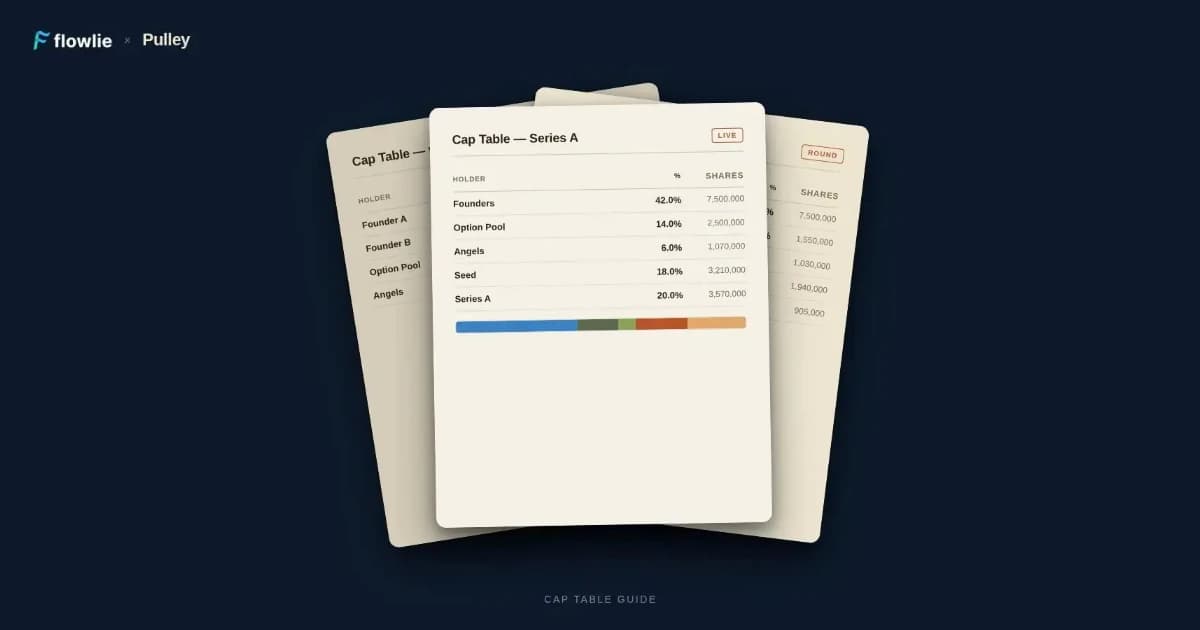
How to Set Up and Manage Your Cap Table Before Fundraising
Keep your ownership structure clean, investor-ready, and properly modeled from day one - so your cap table never derails a deal.

Loading
Explore 5 fundraising platforms offering fresh alternatives to Crunchbase for founders seeking efficient investor research and market intelligence tools.

Ariana Amirkhanian
The best Crunchbase alternatives depend on whether you need deeper institutional-grade data, tailored investor matching with AI, ecosystem-specific insights, trend analysis and market intelligence, or relationship-based discovery through your network. PitchBook provides more granular institutional-grade data including detailed company financials, deal terms, and comprehensive investor profiles used for sophisticated market mapping, competitive benchmarking, and deep due diligence, typically at higher price points than Crunchbase. Flowlie offers AI-powered investor fit scoring that tailors research specifically to your startup by analyzing investment thesis alignment and deep criteria matching, plus integrates network analysis for warm introduction paths and full CRM connecting research directly to fundraising execution. Dealroom focuses on tech ecosystem mapping and growth trends within specific geographies or verticals, providing different lenses for market analysis than Crunchbase's general global coverage. CB Insights emphasizes analyzing and presenting market trends, emerging technologies, and competitive landscapes through curated research, visual maps, and reports rather than functioning primarily as raw data repository. Affinity leverages relationship intelligence by automatically analyzing your communication data and network to identify connection paths to investors through relationship-centric discovery rather than pure database search.
While Crunchbase excels as a broad database for general exploration of companies, funding rounds, and investor details, it doesn't provide the depth, specialization, or integration with fundraising workflow that many founders need beyond initial research. The massive general-purpose database requires substantial manual filtering and verification to identify truly relevant investors, doesn't offer sophisticated matching algorithms that evaluate fit based on your specific company characteristics, lacks integration with relationship mapping showing warm introduction paths, and provides no tools for managing the fundraising process after research is complete. This gap between research and execution drives many founders to seek platforms offering more than just data access.
The right alternative depends on your specific research needs and how you plan to use the information. Choose deeper data platforms like PitchBook when you need institutional-grade details for competitive analysis or sophisticated market mapping. Choose AI-powered platforms like Flowlie when you need tailored investor matching integrated with fundraising execution rather than broad database exploration. Choose specialized platforms like Dealroom when researching specific geographic or sector ecosystems. Choose trend analysis platforms like CB Insights when understanding market shifts and competitive landscapes matters more than individual investor details. Choose relationship intelligence platforms like Affinity when leveraging your existing network connections is more valuable than cold database research. Most successful founders combine broad research tools for initial exploration with specialized platforms for execution-focused discovery and relationship management rather than relying exclusively on general-purpose databases throughout their fundraising journey.
Here are 5 alternatives to consider, each with a different angle on market and investor research:
Flowlie is built as an AI-powered operating system for Seed to Series B fundraising, designed to make the entire process smart and efficient. While Crunchbase provides a broad database for general research, Flowlie offers an integrated platform where investor research is specifically tailored and directly connected to your fundraising execution. Beyond investor data, Flowlie provides strategic planning tools like the Runway & Funding Calculator and Dilution Calculator that help founders make data-driven decisions about their capital needs.
How it differs from Crunchbase: Crunchbase is a broad, general database for company and investor data. Flowlie has a comprehensive investor database, but its focus is on using AI to provide tailored investor fit scoring specifically for your startup, filtering based on deep criteria and investment thesis alignment. It also integrates network analysis to turn research into actionable warm introduction paths and includes full CRM and meeting intelligence, connecting research directly to managing and closing the fundraise – areas Crunchbase doesn't cover.
PitchBook is a major data platform widely used by investors and professionals for in-depth research on private markets, including detailed company financials, deal terms, and investor profiles.
How it differs from Crunchbase: Crunchbase offers broad coverage. PitchBook provides deeper, more granular institutional-grade data and analysis, often used for more sophisticated market mapping, competitive benchmarking, and detailed due diligence on investors or companies. It's generally a higher-end, more expensive research tool.
Dealroom is a data platform focused on understanding tech ecosystems and identifying high-growth companies and investors within specific markets or sectors.
How it differs from Crunchbase: While both are tech databases, Dealroom often emphasizes ecosystem mapping and growth trends within specific geographies or verticals, providing a different lens for market analysis and investor discovery within those contexts compared to Crunchbase's more general global database.
CB Insights is a market intelligence platform known for its research on industry trends, emerging technologies, and market landscapes, often presented through visual maps and reports.
How it differs from Crunchbase: Crunchbase is primarily a data repository. CB Insights focuses more on analyzing and presenting market trends and competitive landscapes, helping founders understand the broader shifts in their industry and identify active players through curated research and visualizations, rather than just raw data points.
Affinity is a relationship intelligence CRM that automatically captures and analyzes communication data to help users leverage their network. While primarily a CRM, it uses data enrichment and network mapping for relationship-based discovery.
How it differs from Crunchbase: Crunchbase is a database for finding information about companies and investors. Affinity is a CRM that leverages your existing network and communication data to help you find connections to investors you might already be indirectly connected to, offering a relationship-centric approach to identifying paths rather than database search alone.
Crunchbase's main limitation is that it provides broad, general data requiring substantial manual filtering, verification, and analysis to identify truly relevant investors for your specific company, without sophisticated matching algorithms evaluating fit or integration with fundraising execution beyond research. The database includes tens of thousands of investors where most are completely irrelevant to your stage and sector, forcing you to manually review hundreds of profiles to build a meaningful target list. Information accuracy varies significantly as it depends partially on self-reported data and community contributions that may be outdated. Crunchbase shows you who exists and their stated criteria but doesn't evaluate whether they actually invest in companies like yours based on portfolio patterns, doesn't surface warm introduction paths through your network, and provides no tools for managing relationships after research is complete, leaving a substantial execution gap between research and fundraising outcomes.
PitchBook justifies higher costs when you need institutional-grade depth for sophisticated competitive analysis, detailed due diligence on investors including fund performance metrics and deal terms, comprehensive market mapping with granular sector breakdowns, or professional-quality reports for board presentations and strategic planning. For founders simply building initial investor target lists or conducting basic market research, Crunchbase's lower-cost access typically provides sufficient information without PitchBook's premium pricing. PitchBook makes most sense for later-stage companies, founders with substantial budgets, or situations where deep competitive intelligence and investor performance analysis directly impact fundraising strategy. Many founders successfully use Crunchbase for discovery then leverage free resources to verify and deepen research rather than paying for PitchBook unless specific institutional-grade data requirements justify the investment.
AI-powered matching platforms analyze your specific company's characteristics including sector nuances, business model, traction metrics, team background, and geography, then compare these against investors' actual portfolio patterns, recent activity, check sizes, and stated thesis to generate personalized fit scores ranking prospects by relevance. Traditional database search simply returns everyone who tagged your broad sector and stage regardless of whether they've actually backed companies like yours. The difference is precision and efficiency: AI matching might surface 30 highly relevant investors with 85%+ fit scores, while database search returns 300 investors requiring hours of manual review to identify the same 30 truly relevant prospects. AI considers nuanced signals like whether investors have deployed capital recently, whether portfolio companies match your specific approach not just broad category, and whether check sizes align with your needs, dramatically reducing wasted outreach to poor-fit investors.
You can use multiple research platforms together for complementary purposes, such as Crunchbase for broad initial exploration plus specialized platforms for deep dives in specific areas, but avoid redundant overlap that creates inefficiency without added value. Effective combinations include Crunchbase for general market mapping plus PitchBook for deep competitive analysis on key competitors, Crunchbase for initial investor discovery plus Flowlie for AI-powered matching and relationship mapping, or CB Insights for market trend analysis plus Crunchbase for identifying specific companies and investors within trending sectors. Ineffective combinations use multiple general-purpose databases that provide similar information with different interfaces, creating administrative overhead synchronizing research across platforms without meaningfully different insights. Budget permitting, specialized tools for different research needs make sense; multiple overlapping general tools rarely do.
Ecosystem mapping visualizes relationships between companies, investors, technologies, and market participants within specific geographies or sectors, showing clusters of activity, investment patterns, and interconnections rather than just lists of individual entities. You need ecosystem mapping when entering new geographic markets to understand local investor networks and company clusters, analyzing sector-specific dynamics to identify the most active participants and their relationships, evaluating partnership opportunities by seeing which companies and investors work together frequently, or positioning your company within competitive landscapes by understanding how market participants relate. Platforms like Dealroom excel at this visualization-heavy approach compared to Crunchbase's entity-focused database structure. Ecosystem mapping provides strategic context that raw data lists miss, particularly valuable for understanding emerging markets or sectors where individual entity information is less useful than understanding relationship patterns and activity clusters.
Investor data should be current within 3-6 months for general information and within 30 days for critical details like whether investors are actively deploying capital, as outdated information wastes time on investors who've left firms, funds that closed to new investments, or partners who've shifted focus. The most critical current information includes recent investments showing actual deployment activity, partner movements between firms (extremely common in venture), fund status indicating whether they're raising new funds versus winding down, and contact information which changes frequently. Data that can be slightly older without major issues includes historical portfolio information, stated investment thesis (changes slowly), and general firm structure. Always spot-check any database's current accuracy by verifying several suggested investors' status through their firm websites or LinkedIn before relying heavily on the data, as even expensive platforms can have outdated information depending on their update processes.
Prioritize breadth when you're in early research stages building initial target lists and understanding the landscape, needing exposure to many potential investors to identify patterns and options. Prioritize depth when you've identified promising targets and need detailed information for outreach personalization, due diligence on investor reputation and terms, or competitive intelligence informing your strategy. Most founders need breadth first through platforms like Crunchbase, then depth on specific targets through deeper research, conversations with portfolio founders, or platforms like PitchBook for institutional details. The most efficient approach uses broad platforms for discovery and filtering, then invests deeper research time only on high-priority targets rather than attempting comprehensive depth on hundreds of potential investors simultaneously. Consider your stage in the fundraising process when choosing tools; early exploration needs breadth, active outreach needs depth.
Verify investor research data by cross-referencing critical information across multiple sources including the investor's firm website for current team and portfolio, LinkedIn profiles showing current employment and recent activity, recent press releases or announcements confirming active investments, and portfolio founders' LinkedIn updates showing current investor relationships. Spot-check randomly selected investors from your research results by verifying they're still at listed firms, recently deployed capital, and focus on your sector before assuming the entire dataset is accurate. Pay particular attention to verifying contact information and recent investment activity, as these change most frequently. If you discover 20-30% of spot-checked information is outdated, treat the entire dataset skeptically and increase verification efforts. Platforms with weekly updates or real-time verification processes generally provide better accuracy than those relying on quarterly updates or community-contributed data.
Market intelligence analyzes trends, patterns, and competitive dynamics within your sector to inform strategic decisions about positioning, timing, and target selection, while raw investor data simply provides facts about individual investors' existence and stated criteria. Intelligence answers questions like "which sectors are attracting the most capital right now?", "which investors are most active in adjacent spaces?", or "how are valuations trending in my category?", helping you contextualize your fundraising strategy. Raw data answers "does this investor invest in SaaS?" or "how many companies are in their portfolio?". Platforms like CB Insights excel at intelligence while Crunchbase excels at raw data. Most founders need both: intelligence to inform overall strategy and timing, data to identify and research specific targets. Intelligence helps you decide whether to raise now, data helps you execute that decision by identifying who to approach.
Relationship-based discovery tools like Affinity analyze your existing network and communication patterns to identify connection paths to target investors through people you already know, while database search tools simply show you which investors exist regardless of whether you can reach them. The fundamental difference is accessibility: database search might identify 50 perfect-fit investors where you have no connections, while relationship tools might surface 20 good-fit investors where you have strong warm introduction paths through former colleagues or advisors. Warm introductions convert at 40-60% versus cold outreach's 1-5%, making the 20 accessible investors more valuable than the 50 inaccessible ones. Relationship tools require different input (your network data and communication history) versus databases requiring search criteria, and they surface opportunities you wouldn't manually discover by showing unexpected connection paths through your extended network.
Free resources like individual firm websites, LinkedIn, free Crunchbase tier, and industry reports can provide sufficient information for building initial target lists and conducting basic research if you have more time than budget, but they require substantially more manual effort and lack sophisticated filtering, matching, and integration features. Expect to spend 3-5x more time achieving similar research outcomes using free resources versus paid platforms, as you'll manually visit dozens of firm websites, verify information across multiple sources, and build your own filtering and organization systems. Free resources make sense during early fundraising planning when you're still validating readiness and have more time for research. Once actively fundraising with limited time, paid platforms' efficiency typically justifies costs through faster target identification and higher-quality matching. Calculate your time value; if 20 hours of manual work saves $200 monthly in platform costs, you're valuing your time at $10/hour, likely a poor tradeoff for founders.
Choose general-purpose databases like Crunchbase when you need broad market visibility across multiple sectors, are targeting investors with diverse portfolios, or haven't yet narrowed your focus sufficiently for specialized tools. Choose specialized sector platforms when you're in well-defined verticals like biotech, climate tech, or fintech where sector-specific platforms provide deeper investor intelligence, relevant network connections, and nuanced understanding of sector dynamics that general databases miss. Specialized platforms often include sector-specific features like regulatory tracking, technology trend analysis, or partnership mapping that general databases don't provide. The trade-off is coverage; specialized platforms deeply cover narrow sectors while missing investors outside that focus. Most founders start with general platforms for initial broad research, then supplement with specialized platforms once they've confirmed their target sector and need deeper intelligence within that space.
Evaluate research platform quality by assessing data accuracy through spot-checking verified investors against their firm websites, update frequency by checking when information was last refreshed, coverage breadth appropriate to your needs and stage, filtering sophistication enabling precise targeting rather than just broad searches, data sources and verification methods the platform uses, and integration with your workflow beyond pure research. Test platforms' accuracy by searching for investors you personally know, verifying the platform's information matches reality. Request trials showing real results for your specific company rather than accepting generic demos. Ask about update processes and data verification methods. Read reviews from founders at your stage and sector, as platform quality varies significantly for different use cases. The best research platform is accurate, current, and integrates with your fundraising workflow rather than existing as isolated research tool requiring manual transfer of findings.
Turn investor research into actionable target lists by first filtering research results to investors actively deploying capital in your sector and stage, scoring each by fit quality using portfolio similarity and thesis alignment, identifying warm introduction paths through your network for each prospect, organizing by priority tiers based on ideal fit versus backup options, and documenting specific personalization points for outreach. Avoid simply exporting entire research results into lists without curation; a focused list of 30-50 highly relevant investors you can reach outperforms sprawling lists of 200 mixed-quality targets requiring excessive time to contact. For each investor, document recent investments proving fit, specific partners to target within firms, potential introduction paths you've identified, and talking points connecting your company to their thesis. This transforms raw research into strategic, prioritized targets with clear action plans rather than overwhelming undifferentiated lists.
Investor research at pre-seed and seed stages emphasizes individual angels, micro-VCs, and seed funds with focus on personal investor preferences, smaller check sizes, and relationship-driven decisions requiring detailed individual-level information. Series A and B research emphasizes institutional funds with focus on partnership consensus, portfolio fit, and firm-level investment thesis requiring understanding of fund strategies and partner specializations. Later-stage research emphasizes growth equity firms and crossover investors with focus on financial metrics, exit potential, and institutional processes. Research platforms optimized for early stages provide different depth and features than those serving later stages. Using growth-focused research tools for seed fundraising provides excessive institutional detail without sufficient individual investor information, while using angel-focused tools for Series B provides inadequate institutional analysis. Choose research platforms explicitly designed for your current stage rather than generic tools attempting to serve all stages equally.
Crunchbase is an invaluable starting point for broad market and investor research. But depending on how you need to use data – whether for highly tailored investor matching, deep market analysis, understanding specific ecosystems, tracking trends, or leveraging your network – an alternative might offer more specific leverage.
Consider what kind of insights are most critical for your next steps. Do you need a tailored list of best-fit investors, or broad market data? Do you need help finding warm intros, or just contact information? The right research tool, or combination of tools, will power your fundraising strategy most effectively.
Join thousands of founders using our technology to find the right investors and close rounds faster than ever before.
Keep your ownership structure clean, investor-ready, and properly modeled from day one - so your cap table never derails a deal.

Master post-raise spend management so your capital lasts long enough to hit the milestones that unlock your next round.
Master your fundraising tool stack by understanding what Metal does well, where it falls short, and which alternatives actually fit your stage and budget.