
ResourcesStructruing
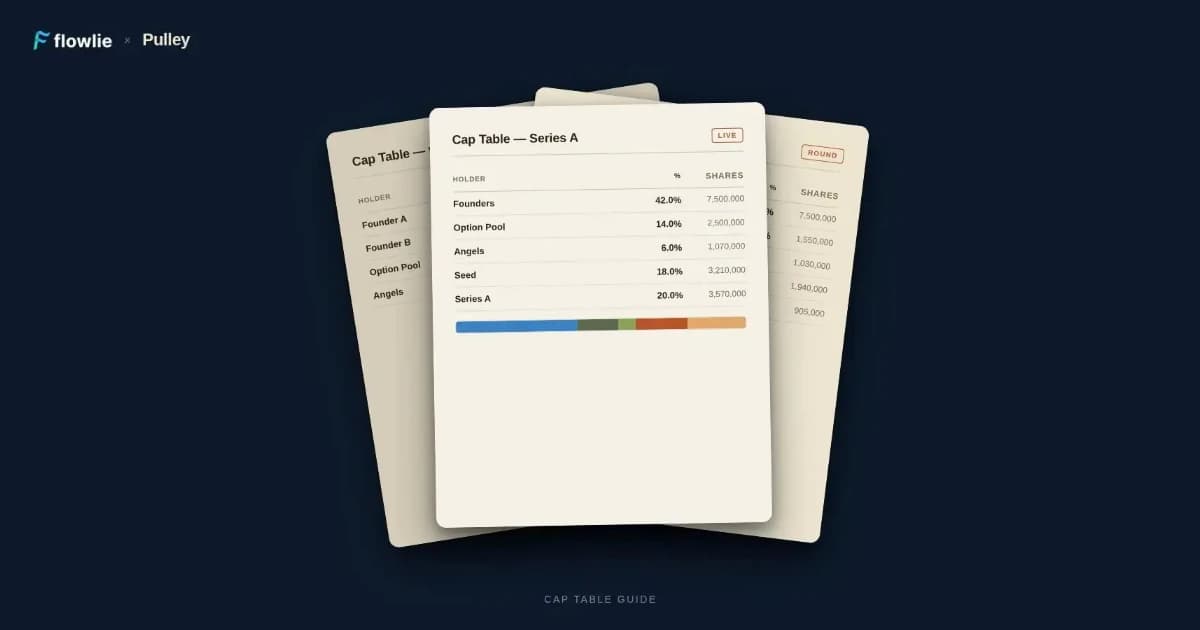
How to Set Up and Manage Your Cap Table Before Fundraising
Keep your ownership structure clean, investor-ready, and properly modeled from day one - so your cap table never derails a deal.

Loading
Explore 5 fundraising platforms offering fresh alternatives to OpenVC for founders seeking efficient investor discovery and engagement tools.

Ariana Amirkhanian
The best OpenVC alternatives depend on whether you need smarter matching algorithms, relationship intelligence for warm introductions, comprehensive market research capabilities, or integrated workflows managing the entire fundraising process beyond just discovery. Flowlie offers AI-powered fit scoring that evaluates investors based on your specific startup's characteristics, investment history, and thesis alignment rather than basic criteria matching, plus network analysis actively finding warm introduction paths through your connections and integrated CRM with meeting intelligence for managing steps after initial contact. Crunchbase provides extensive raw database access for deep-dive research on investors, funding rounds, and market trends with flexibility to conduct your own analysis rather than relying on algorithmic matching. Affinity focuses specifically on relationship intelligence by automatically analyzing your communication data to map network connections and identify the strongest warm introduction paths to investors. AngelList's Raise product helps manage investment processes after investors commit, handling deal logistics and cap table management. PitchBook delivers professional-grade comprehensive data for sophisticated market analysis and strategic target list building at higher price points.
While OpenVC helps founders discover investors through algorithmic matching based on stated criteria like stage, sector, and geography, it doesn't address what happens after discovery: how to actually reach those investors through warm introductions, how to manage outreach and follow-ups systematically, or how to track engagement and convert conversations to commitments. Founders often find that investor discovery is necessary but insufficient; knowing which investors exist matters far less than knowing how to reach them through credible introductions and managing relationships effectively throughout the fundraising process. This gap between discovery and execution drives many founders to seek platforms offering more comprehensive functionality.
The right alternative depends on your specific bottleneck in the fundraising journey. Choose platforms with advanced AI matching like Flowlie if you're drowning in investor lists and need better targeting to identify truly relevant prospects. Choose relationship intelligence platforms like Affinity if your challenge is converting cold targets into warm introductions through your existing network. Choose comprehensive databases like Crunchbase or PitchBook if you need deep research capabilities for strategic analysis beyond simple matching. Choose deal management platforms like AngelList if you've already connected with interested investors and need help closing. Most successful founders need discovery integrated with relationship mapping and pipeline management rather than discovery tools operating in isolation from the rest of their fundraising workflow.
Here are 5 alternatives to consider, each with a different angle on tackling investor discovery and engagement:
Flowlie is built as an AI-powered operating system for Seed to Series B fundraising, designed to make the entire process smart and efficient. While OpenVC helps you find investors based on matching criteria, Flowlie offers a different level of intelligence and connected workflow starting with discovery.
How it differs from OpenVC: OpenVC provides investor matching based on criteria. Flowlie also has a large investor database, but its AI gives you a tailored fit score for each investor based on your specific startup, their investment history, and investment thesis. This means you find better-fit investors more accurately than with standard matching. Additionally, Flowlie adds network analysis to actively find warm introduction paths through your connections – a powerful way to get connected after discovery that OpenVC doesn't offer. It also integrates full CRM and meeting intelligence, supporting the steps immediately after initial contact.
Crunchbase is a widely used database that provides extensive information on companies, funding rounds, investors, and market trends. It's a powerful resource for researching the investment landscape.
How it differs from OpenVC: OpenVC gives you matches based on an algorithm. Crunchbase is a raw database and market intelligence platform – it gives you the data to do your own deep dive research on investors based on deal history, portfolios, and other data points, offering flexibility in how you approach discovery.
Affinity is a relationship intelligence CRM that goes beyond simply managing contacts. It automatically analyzes communication data to map out your firm's network, identifying the strongest paths to potential investors through warm introductions
How it differs from OpenVC: OpenVC relies on matching algorithms. Affinity focuses on analyzing and leveraging existing relationships within your network to find connections to investors. It automatically identifies the warmest paths to introductions, focusing on relationship strength and history, effectively turning your network into a deal-finding engine.
AngelList's platform, particularly its "Raise" product, helps founders manage the investment process once investors are interested, including inviting commitments, handling deal logistics, and managing the cap table.
How it differs from OpenVC: OpenVC helps you find potential investors initially. AngelList provides tools for managing the process of bringing investors into your round once you've connected and they're ready to commit, focusing on the deal closing workflow and cap table management.
PitchBook is a major data platform providing in-depth information on venture capital deals, investors, and companies. It's widely used for detailed market analysis and identifying investment trends.
How it differs from OpenVC: OpenVC facilitates founder-led discovery based on matching profiles. PitchBook offers comprehensive, professional-grade research capabilities that allow for sophisticated analysis to inform your overall investor discovery strategy and target list building through extensive market and deal data, often at a higher price point and depth than OpenVC.
AI-powered investor matching analyzes your specific startup's characteristics including sector, stage, business model, traction metrics, and team background, then compares these against investors' actual portfolio patterns, recent investment activity, check sizes, and stated thesis to generate personalized fit scores. Basic criteria filtering simply shows all investors who selected your sector and stage in their profile, regardless of whether they've actually invested in companies like yours recently. The difference is precision: AI matching might show you 30 highly relevant investors ranked by fit, while basic filtering shows 300 investors where 270 aren't actually good matches. AI considers nuanced signals like whether investors have deployed capital recently, whether their portfolio companies match your business model, and whether their typical check size aligns with your needs, while basic filtering only considers broad categories.
Warm introduction paths are connection routes through your existing network to target investors, typically involving mutual contacts who can credibly introduce you rather than cold outreach. They matter dramatically more than just knowing investor names because warm introductions convert to meetings at 40-60% rates versus cold outreach's 1-5% rates, and meetings secured through warm introductions typically involve more engaged investors who've been pre-validated by trusted sources. Knowing that Partner X at Fund Y invests in your space is worthless if you can't reach them; discovering your co-founder's former colleague works at one of their portfolio companies creates an actionable path. Tools that identify investors without showing how to reach them through your network leave founders staring at inaccessible targets, while relationship intelligence platforms surface the hidden connections that turn lists into actual conversations.
Consolidate into one primary discovery platform rather than using multiple tools that create disconnected workflows, data synchronization headaches, and increased subscription costs without proportional value. Many founders start combining OpenVC for matching plus Crunchbase for research plus LinkedIn for network mapping, then realize they're spending excessive time jumping between platforms and manually tracking which investors came from which source. Choose one comprehensive platform handling discovery, relationship mapping, and pipeline management as your foundation, supplementing only for highly specialized research needs your main platform doesn't address. The exception is if you have dedicated resources managing fundraising full-time who can effectively coordinate multiple specialized tools, but most founder-led raises benefit from simplicity over theoretical feature breadth across disconnected systems.
Data quality and relevance matter far more than raw database size, as having access to 50,000 investors where 49,000 are completely irrelevant to your stage and sector provides less value than curated access to 500 highly relevant investors with accurate, current information. Large databases often include outdated information like investors who've left firms, funds that closed to new investments, or partners who've shifted focus, wasting your time on dead ends. Smaller, curated databases with verified recent activity, accurate contact information, and detailed investment thesis descriptions enable more efficient targeting than massive databases requiring hours of manual verification. Evaluate platforms based on relevance of results and accuracy of information rather than total investor count, particularly if you're at specific stages or in niche sectors where most broad-database investors aren't relevant.
Investor discovery platforms focus on identifying potential investors you should target through database search, filtering, matching algorithms, or relationship mapping before you've established contact. CRM tools focus on managing relationships with investors you've already identified and contacted, tracking interactions, scheduling follow-ups, and moving prospects through your fundraising pipeline. The fundamental difference is timing: discovery happens first to build your target list, CRM happens afterward to convert targets to commitments. Many founders need both capabilities but at different stages, making platforms that integrate discovery with CRM more efficient than using separate tools requiring manual transfer of discovered investors into relationship management systems. The most effective fundraising platforms handle the complete flow from "who should I target?" through "how do I reach them?" to "how do I convert them?"
Validate investor discovery results by researching whether suggested investors have actually deployed capital in the past 6-12 months showing they're actively investing, portfolio companies similar to yours in stage, business model, and sector, check sizes matching your raise amount, and stated thesis aligning with your specific approach rather than just broad sector. Look beyond surface-level matches; an investor tagged "SaaS" might only invest in enterprise infrastructure while you're building consumer productivity software. Review their recent investments on their website or LinkedIn rather than trusting potentially outdated database tags. Cross-reference multiple data sources to verify accuracy. Reach out to founders they've backed to understand their actual focus versus stated focus. High-quality discovery platforms surface these validation signals automatically rather than requiring hours of manual verification per investor.
Most traditional investor discovery platforms only identify targets, leaving you to figure out how to reach them independently, while advanced platforms like Flowlie add relationship intelligence showing warm introduction paths that dramatically increase your meeting conversion rates. Simply knowing Partner X exists and invests in your space doesn't help you unless you can get introduced; discovering your advisor worked with them previously creates actionable opportunity. Platforms providing just names and criteria force you to either cold email with terrible response rates or manually stalk LinkedIn connections hoping to find introduction paths. Integrated platforms that combine discovery with network mapping and introduction workflow management help you actually secure meetings rather than building unusable lists of inaccessible investors, transforming discovery from research exercise into action-oriented process.
Investor databases require continuous updates as investors change firms (extremely common with frequent partner movements), funds close or open to new investments, thesis focuses evolve, and deal activity fluctuates indicating who's actually deploying versus sitting on sidelines. Databases updated quarterly or less frequently contain substantial outdated information including investors no longer at listed firms, incorrect contact information, and stale investment focus areas. Weekly updates or real-time verification processes ensure accuracy but are rare outside premium platforms. Before relying heavily on any database results, spot-check recent accuracy by verifying several suggested investors' current status through their firm websites or LinkedIn. Outdated discovery results waste your limited time and relationship capital reaching out to wrong people or using incorrect information that damages credibility.
Early-stage investor discovery platforms emphasize angels, micro-VCs, and pre-seed/seed funds with detailed information about individual investors' preferences, smaller check sizes, and faster decision processes. Late-stage platforms emphasize growth equity firms, larger institutional VCs, and corporate investors with focus on deal team composition, portfolio support capabilities, and follow-on funding capacity. The data requirements differ substantially; seed-stage discovery needs granular individual investor information and network paths, while growth-stage discovery needs firm-level analysis, portfolio company trajectories, and institutional process understanding. Many general platforms claim to cover all stages but provide inadequate depth at either extreme. Choose platforms explicitly built for your current stage rather than generic tools attempting to serve everyone, particularly at pre-seed and seed where individual investor relationships matter more than institutional firm characteristics.
Discovery platforms vary dramatically in international coverage, with many heavily US-focused databases providing limited accurate information on investors in Europe, Asia, Latin America, or other regions. If you're raising internationally or from remote investors, verify that your discovery platform includes substantial verified data on investors in your target geographies rather than assuming comprehensive global coverage. Some platforms excel in specific regions (UK/Europe, Southeast Asia) while lacking depth in others. Consider whether international investors actually invest in your geography; many European funds rarely invest in US companies and vice versa despite being included in global databases. If targeting remote investors, prioritize platforms showing whether investors have track records of remote investment versus only backing local companies, as this dramatically affects your realistic success odds.
Use premium investor databases when actively fundraising and time is valuable, as they save dozens of hours versus manually aggregating free resources and provide verified accuracy reducing wasted outreach to outdated targets. Free resources like individual firm websites, Crunchbase's free tier, and LinkedIn provide sufficient information for early research and target list building if you have more time than budget. However, free resources require substantially more manual effort verifying information, lack sophisticated filtering and matching, don't provide warm introduction path analysis, and often contain outdated information. Calculate your time value; if 20 hours of manual research saves $300 in platform costs but delays your fundraising by two weeks, the opportunity cost far exceeds the subscription savings. Premium platforms make sense during active raises when speed matters; free resources suffice during early planning when you're still validating your fundraising readiness.
Build target lists by starting with discovery platform results filtered to your specific criteria, scoring each investor by fit quality and accessibility through warm introductions, researching top matches more deeply to verify accuracy and recent activity, organizing by priority tiers based on ideal fit versus backup options, and documenting specific reasons why each investor is relevant for personalizing outreach. Avoid simply exporting entire discovery results into your pipeline; a focused list of 30-50 highly relevant investors you can actually reach outperforms a sprawling list of 200 mixed-quality targets. For each investor, document their recent investments showing proof of fit, specific partners to target within the firm, potential warm introduction paths you've identified, and talking points connecting your company to their thesis. This preparation transforms raw discovery results into actionable, prioritized targets rather than overwhelming undifferentiated lists.
Network analysis transforms investor discovery from identifying who exists to understanding who you can actually reach through credible introductions, which investors share your values through mutual connections' experiences, and which connection paths are strongest based on relationship history and professional context. Simply discovering that Fund X invests in your sector is the baseline; understanding that your co-founder's former boss sits on two of Fund X's portfolio company boards and speaks highly of their partnership creates actionable opportunity. Network analysis reveals hidden strengths in your existing relationships, often surfacing introduction paths through unexpected connections you wouldn't manually consider. The most sophisticated platforms automatically analyze your team's collective network, scoring connection strength and suggesting optimal introduction sequences rather than requiring manual LinkedIn stalking for each potential investor.
Avoid wasting time on seemingly-relevant investors by verifying they've actually deployed capital in the past 6-12 months rather than just having "active" database status, checking that their recent investments closely match your specific business model not just broad sector, confirming their typical check sizes align with your raise amount, and seeking feedback from founders they've backed about their current investment appetite. Many investors maintain database profiles claiming active investment while effectively sitting on sidelines between funds or focusing exclusively on portfolio support. Discovery platforms showing last investment dates and deal velocity help filter truly active investors from those technically "active" but practically unavailable. Prioritize investors with demonstrated recent activity in companies closely comparable to yours over those with stale activity or generic sector matches.
Advanced discovery platforms analyze investors' actual behavior through portfolio patterns, investment pacing, deal size trends, and syndication relationships to reveal preferences beyond their stated criteria, showing what they actually fund versus what they claim to fund. An investor might list "fintech" as a sector but actually only invest in payment infrastructure, not lending or wealth management. They might accept pitches from seed-stage companies but only lead Series A rounds. Discovery platforms incorporating behavioral analysis reveal these nuanced preferences that stated criteria miss, dramatically improving your targeting accuracy. Less sophisticated platforms rely purely on self-reported criteria that often don't reflect actual investment behavior, leading to mismatched outreach and wasted time pitching investors who seem like fits based on their website but never actually back companies like yours.
If discovery platforms lack investors in your niche sector, expand search criteria to adjacent sectors where investors might also fund your space, research which investors backed tangential companies facing similar problems, manually identify portfolio companies solving related problems and research their investors, attend sector-specific events and conferences where niche investors gather, and consider whether your sector truly supports venture funding or whether alternative capital sources like grants, strategic investors, or revenue-based financing better match your business model. Some truly emerging sectors simply lack established venture investors yet, requiring you to educate investors from adjacent spaces about why your sector represents an opportunity. Build target lists starting with investors who backed the most closely-comparable companies even if imperfect matches, as these investors have demonstrated willingness to fund similar challenges.
OpenVC provides a useful starting point for finding investors based on matching criteria. But how you execute the steps that follow discovery is just as critical.
Consider where you need the most leverage in finding and connecting with investors. Is it getting smarter matches? Finding warm intro paths? Managing communications once you have leads? The right alternative will offer the specific tools that best amplify your efforts in navigating the early stages of investor engagement..
Join thousands of founders using our technology to find the right investors and close rounds faster than ever before.
Keep your ownership structure clean, investor-ready, and properly modeled from day one - so your cap table never derails a deal.

Master post-raise spend management so your capital lasts long enough to hit the milestones that unlock your next round.
Master your fundraising tool stack by understanding what Metal does well, where it falls short, and which alternatives actually fit your stage and budget.